
Life Insurance Corporation of India (LIC) reported weak growth through H1FY24 but it witnessed a boost in embedded value (EV) due to equity-market performance. But concerns regarding its stock include loss of market share as it is outpaced by private sector rivals, sticky operating expenses (reduced slightly year-on-year but up in Q2FY24 versus Q1FY24), and high sensitivity of embedded value to equity volatility. Traders may also factor in the likelihood of another stake sale by the Government of India.

Manappuram declared consolidated assets under management (AUM) growth of 27 per cent year-on-year (Y-o-Y) (5.1 per cent quarter-on-quarter or Q-o-Q) to Rs 38,950 crore. Net interest income (NII) saw a margin expansion of 24 basis points (bps) Q-o-Q to 15.44 per cent.

After a technology upgrade, the Multi Commodity Exchange of India (MCX) appears poised for an improvement in volumes. The premier commodity and forex exchange reported a loss of Rs 19.1 crore in the July-September quarter (second quarter, or Q2) of 2023-24 (FY24). This was attributed to higher software charges payable under an extended service agreement with 63 moons technologies and a one-off cost towards core guaranteed funds (CGF).

Strong performance by its US subsidiary Novelis and better returns in the copper business helped Hindalco Industries post consolidated revenue growth of 2 per cent quarter-on-quarter (Q-o-Q) to Rs 54,100 crore in the July-September quarter of 2023-23 (Q2FY24). Novelis' Flat Rolled Products (FRP) volumes grew 6 per cent Q-o-Q to 933,000 tonnes (down 5.2 per cent Y-o-Y) on better North American and European volumes. The consolidated earnings before interest, taxes, depreciation, and amortization (EBITDA) declined 2 per cent Q-o-Q to Rs 5,610 crore despite lower input costs in India and better Novelis performance.

Info Edge (India) reported good Q2FY24 results with hiring across other segments helping offset weak IT performance. The revenue increased 11.5 per cent year-on-year (Y-o-Y) to Rs 593 crore, (up 1.5 per cent quarter-on-quarter or Q-o-Q). The earnings before interest, taxes, depreciation, and amortization (Ebitda) margin was excellent at 40.7 per cent, up 200 basis points year-on-year (Y-o-Y).

The medium-term scenario for oil marketing companies (OMCs) is high risk due to the surging crude and gas prices. Apart from OPEC-plus cutting production, the Hamas-Israel conflict has caused fears of supply disruption. The July-September quarter of 2023-24 (Q2FY24) saw positive surprises for OMCs. Strong gross refining margins (GRMs) more than offset weak marketing margins.

There was an acceptable domestic performance in India but there continues to be concerns about the Europe business and that overshadows the local performance. The consolidated revenues for the Q2FY24 stood at Rs 55,682 crore with an operating profit of Rs 4,315 crore and an operating profit margin of 8 per cent.

In the July to September quarter of 2023-24 (Q2FY24), Voltas' revenues grew by 29.7 per cent year-on-year (Y-o-Y), but the adjusted net profit was down by 63 per cent Y-o-Y. The revenues hit Rs 2,290 crore, led by growth in the Unitary Cooling Products segment (up 15.4 per cent Y-o-Y, and in the EMP (Electromechanical project) business (up 66.8 per cent Y-o-Y). The UCP revenue rose to Rs 1,200 crore in Q2FY24, driven by volume growth despite weak consumer spending - the three-year annual growth is 18 per cent.

ICICI Prudential Life Insurance Company (IPru) is struggling to generate growth in the value of new business (VNB). This is due to a combination of weak growth through the parent bank's channels, a shifting product mix in favour of unit-linked life insurance policies (ULIPS), and higher payouts to third-party channels. Leverage from current investments, a further reduction in contributions from ICICI Bank, and a pick-up in non-participating policies from the end of the year is key for this metric in the near to medium term.
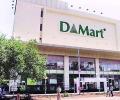
Avenue Supermarts, the operator of DMart retail chain, reported good results for the July-September quarter (Q2FY24) with strong earnings before interest before interest, taxes and depreciation (Ebitda) and profit before tax (PBT) growth, but lower PAT due to higher tax incidence. The operating margin improved, and like-to-like store sales growth was strong. Average bill value also increased though this may be a seasonal effect to some extent. Analysts are assuming this means the slowdown in retail may have bottomed out.

Grasim Industries has announced a rights issue of around Rs 4,000 crore with the promoters committed to fully subscribing to their entitlements and to covering any unsubscribed portion. This is to part-fund capital expenditure (capex) of Rs 10,000 crore in a new foray into the paints business. The company has already invested Rs 3,640 crore in the paints business (by Q1FY24). The management has outlined a capex of Rs 5,700 crore for FY24, which includes Rs 4,280 crore allocated for the paints business, of which Rs 1,050 crore has already been spent in Q1FY24.

HDFC Asset Management Company (HDFC AMC) reported a healthy profit after tax (PAT) of Rs 430 crore for the July-September quarter (Q2) of financial year 2023-24 (FY24). It rose 20.2 per cent year-on-year (Y-o-Y) and decreased 8.4 per cent quarter-on-quarter (Q-o-Q). This was driven by good equity returns, leading to a sequential improvement in revenue yields.

The Reserve Bank India's (RBI's) decision to ban the onboarding of new accounts on the "bob World" mobile digital platform led to a selloff in the Bank of Baroda (BoB) stock. The stock of the public sector bank dropped by around 3 per cent. The central bank cited "material supervisory concerns"; news reports claimed mobile numbers were randomly linked to accounts to purportedly inflate registrations on bob World.

Maruti Suzuki India (MSIL) has ambitious plans to increase capacity. It is also seeking shareholders' approval for a complex swap transaction, which would acquire Suzuki Motor Gujarat (SMG), a subsidiary of Suzuki Motor Corporation (SMC) through a preferential offer. SMC already holds 56.37 per cent of MSIL's equity.

It's all eyes on the consumer durables sector during the festival season after a weak Q1FY24 and Q2FY24 was impacted by an erratic monsoon. Traditionally, this period sees the highest number of purchases. Dealers and manufacturers are complaining about low business-to-consumer (B2C) off-take during the first half.

MMFS is looking at a compounded annual growth rate (CAGR) of 18 per cent in assets under management (AUM) during FY23 to FY26 on the back of the strong recovery. The company has initiated risk-mitigating initiatives, including diversification into non-vehicle loans, building digital capacity and re-classification of customer profiles into affluent and mass-affluent in semi-urban segments to better target marketing.
Debt management is going to be a worry for the Vedanta group until FY25 at least. However, the restructuring of business divisions in Vedanta India could lead to an unlocking of values. The group structure is fairly complex. Anil Agarwal-led Vedanta Resources (VRL), which is London-listed, has a lot of debt on the balance sheet. It will have to repay $1 billion in secured bonds by January 2024 and at least another $300 million in calendar 2024.

While Emami is still struggling to push growth, given weak rural demand, the sale of the group's stake in AMRI Hospitals should ease investor concerns about stake pledges by promoters. It has also carried a series of stake acquisitions which should enable the expansion of its brand portfolio. The Q2 results are likely to see flat volumes and low revenue growth alongside some gross margin expansion.

Sikhs have more in the way of domestic clout and electoral representation in Canada than they do in India. No politician in Ottawa can ignore the concerns of a community with this level of representation, notes Devangshu Datta.

The affordable housing segment may be seeing an uptick which is a good sign of consumption momentum. This is the biggest-ticket purchase for middle income and lower income families. The current activity is at least partly driven by a pause in interest rate hikes.
